

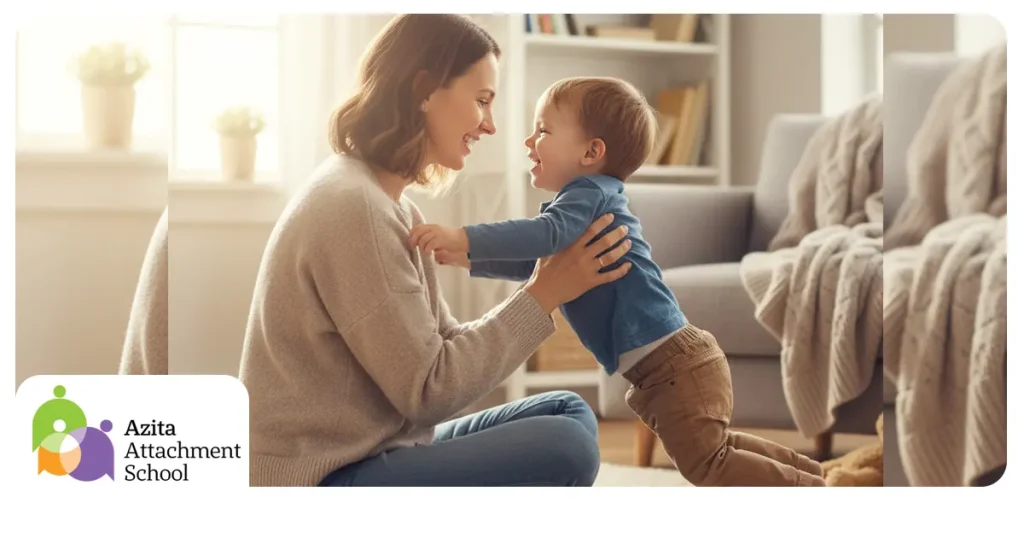
When a child laughs, hides, or runs into a parent’s arms, they’re not just playing — they’re building trust, joy, and emotional safety.
Play is the hidden language of attachment — the way children learn:
“I am seen, heard, and safe.”
As Donald Winnicott said:
“It is in playing that the real relationship between parent and child begins.”
First introduced by Aletha Solter (2013), attachment play refers to specific kinds of playful interaction designed to heal emotional wounds, reduce anxiety, and strengthen the parent–child bond.
It’s not about winning or teaching rules — it’s about connection through laughter, touch, and empathy.
Type | Purpose | Example |
Power Reversal Play | Restores control | Child “defeats” parent in a funny game. |
Separation Play | Eases anxiety | Peekaboo, hide and seek. |
Giggle Play | Releases fear | Parent pretends to make silly mistakes. |
Nurturing Play | Builds empathy | Child plays caregiver role. |
Role Reversal Play | Deepens understanding | Parent and child swap roles. |
Sahar, age 7:
After her baby brother’s birth, she became clingy and irritable. Her mother practiced 15 minutes of “nurturing play” nightly — Sahar acted as the mother putting dolls to bed.
Two weeks later, her anxiety dropped, and she said:
“Mom, now I know you still love me.”
15 minutes of daily child-led play.
Let laughter lead — it releases tension.
Avoid control or correction.
Maintain gentle physical contact.
Use play to reconnect after conflict.
During play, the brain synchronizes emotion (amygdala), reasoning (prefrontal cortex), and movement (motor cortex).
This integration builds emotional intelligence, empathy, and stress tolerance.
Play is not a luxury — it’s the foundation of emotional connection.
Each giggle and hug teaches a child that love is safe, steady, and real.
In an anxious world, play is where love breathes again.