

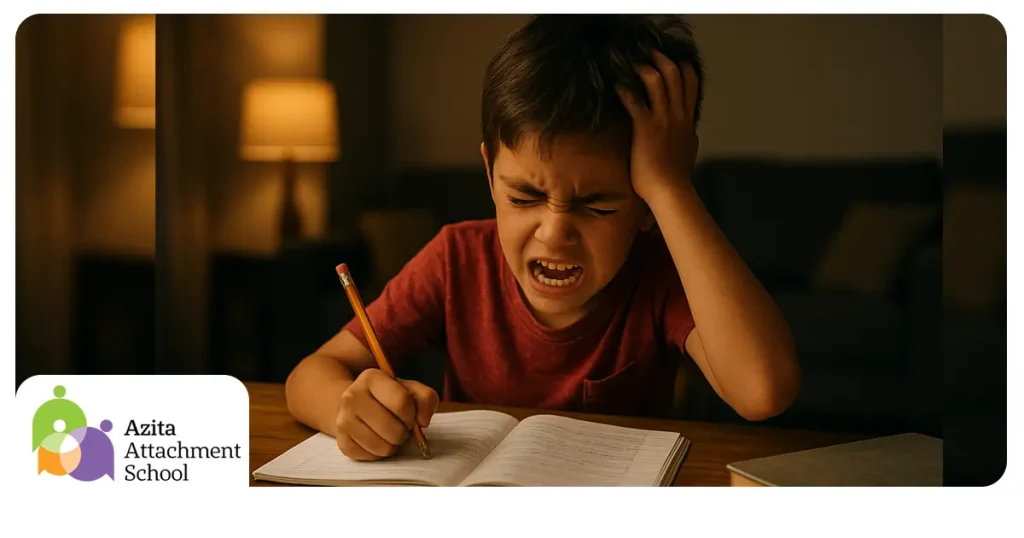
Evenings in many homes follow a familiar pattern: tired parents, restless children, and a pile of unfinished homework. What begins as learning often turns into a battle of control and resistance.
But attachment psychology reveals that these struggles aren’t really about homework — they’re about autonomy, anxiety, and the child’s need for connection.
Many parents unconsciously act as teachers—correcting, judging, or overhelping. This turns the home into a performance zone rather than a safe space. The child begins to associate homework with shame and parental pressure instead of curiosity.
Homework is not just a cognitive task but an emotional interaction. Through their parents’ reactions, children learn:
When parents react with anxiety or control, children internalize fear instead of confidence.
Mohammad, age 9:
His mother constantly supervised and corrected his homework. After coaching, she changed her approach:
“I trust you to handle it, and I’m here if you need help.”
The nightly conflicts disappeared. Mohammad’s sense of competence—and calm—returned.
Parents often carry their own performance anxiety from childhood. Their hidden message becomes:
“You’re only good enough when you achieve.”
Though rooted in care, this fuels resistance.
Ten-minute reflection on “What did you learn today?”
Create an “emotion & progress journal.”
Flexible schedules over strict routines.
Praise effort, not perfection.
Learn something together as a family.
Homework struggles are not a sign of laziness — they’re a sign of disconnection. When parents replace control with curiosity, learning becomes joyful again.
A secure home teaches a child:
“Mistakes are safe here, because love doesn’t depend on performance.”